

The AI Landscape Will Keep Shifting. Here's How to Stay Steady.
Your process for staying current without starting over.

I was fortunate enough this past week to take a trip down south. I spent some face-to-face time with my amazing co-founder, Katie. It was a long drive from New Jersey to South Carolina, but one that was so worth it. Especially given the current state of airports.
In my time there, I had a conversation with Katie and her husband about where we were seeing AI adoption. It quickly led to her husband and my love for Granola, the AI notetaker. I’m only on the free version currently, as I was thinking if it was wasteful to use since I have a Google Workspace.
His company decided to drop Granola since Gemini is now a notetaker in Google Meet. It does seem redundant to have both, but Granola seems to have the workflow in mind, not just note-taking. That’s the quiet exhaustion that is hitting professionals. You learn a tool, integrate it into your workflow, and then it is gone.
Tool shifting isn’t a failure or a flaw; it’s a part of the work environment. It doesn’t make it easier. We all would prefer a tool that we have invested in to stick around. I hope meaningful discussions are happening around these types of decisions.
I saw Allie K. Miller’s tool subscriptions her company uses and was quickly trying to add up the bill. Yikes! I’ve seen cost come into these conversations, as it should in my opinion, especially for start-ups like mine. Why pay double?
This tool tension existed years ago as well. As an instructional coach working with our IT department in PK-8 schools, we would battle over it. I would like a tool for its user interface or capabilities. IT would not because of how it integrated with our hardware. So who wins?
This issue should be planned for, and the Department of Labor (DOL) did just that. As we wrap up our series of posts looking at the DOL AI Literacy Framework, we will look at how to navigate this.
Staying Present
If you're new to the series, the DOL issued TEN 07-25, on February 13, 2026, their voluntary AI Literacy Framework, the roadmap behind this entire series. This post focuses on two of the seven delivery principles that most broader AI conversations don’t talk about.
Principle 5 - Create Pathways for Continued Learning
Foundational AI literacy is the starting point, but we know that is not where the learning ends. Over the years, I’ve seen large groups of people adopt different software and technology practices at scale. Laying the foundation is important, but that is not how true integration happens.
I’m happy to see the DOL acknowledge that. Integration takes time. In my opinion (and research), it takes team and environment support. It’s all those smaller conversations where individuals share what works for them. I think this is why some people are migrating away from mainstream social media and loving communities like Substack, Skool, etc.
Principle 7 - Design for Agility
We have seen firsthand how quickly AI tools can evolve and change. Whether from a model update or politics, the tool of the moment can become last week’s news. This calls for flexible training, a system for continuous updates, and feedback-driven iteration using real workplace examples.
These two principles say something. Staying current isn’t about mastering every new tool. It is all about the adaptability of practice. If you have a reliable practice for evaluating what’s worth your attention. Who has time to evaluate every tool? This is where things need to get practical.
Why Tool Shifting is Normal
Anyone still using Clippy? I saw a meme this week that called him the first bot! Haha. The truth is, tools are replaceable. The AI landscape is not going to slow down and wait for you to catch up. It’s just the context that we are all living in.
When a new tool starts gaining noise, don’t immediately assume it’s for you, and you need to pass a test. Instead, ask questions. The DOL framework is tool-agnostic for this reason. At EmpowerED AI, my consulting company, we are largely too because we believe that to be truly human-centered, the tool should come second.
The thinking skills that work regardless of the tool are far more important than any platform. Professionals who navigate this well stop trying to know everything and start trusting their process for evaluating what matters. Katie’s husband didn’t fail at mastery or not keep up. The landscape shifted, and he noticed. That’s the skill, and more than most people do.
The Repeatable Process
This process works regardless of what the tool is or when it arrives. It worked before now, and it will work after the next wave of releases. First, ask one question. Before you sign up or download, does this support a task I already do or a goal I already have? If no, you don’t need this right now. Stop the guilt and set it aside.
Second, test it in your specific context. A broad evaluation won’t give you the assessment you really need. Test it on the specific task that passed you to this point. Your context is the only context that matters for this decision. A real evaluation of what each tool did in the moment you actually used it for your workflow, outcomes, and professional context. Think about what worked, what didn’t, what you would use again, and why.
Third, assess it against your existing workflow. Ask yourself if it simplified what you already do or did it complicate it? Does it replace something in a way that actually serves you? You are not looking for the best tool; you are deciding the best fit. Sometimes that will be both. A tool that works well for someone else’s job may do nothing for yours.
I can apply this to Granola and Gemini. Gemini will give me notes from my meeting, email them to me after the meeting, and attached to the calendar event. I could also ask Gemini for a meeting update if I’m running late. If I am the meeting organizer, I will also find the notes in my drive.
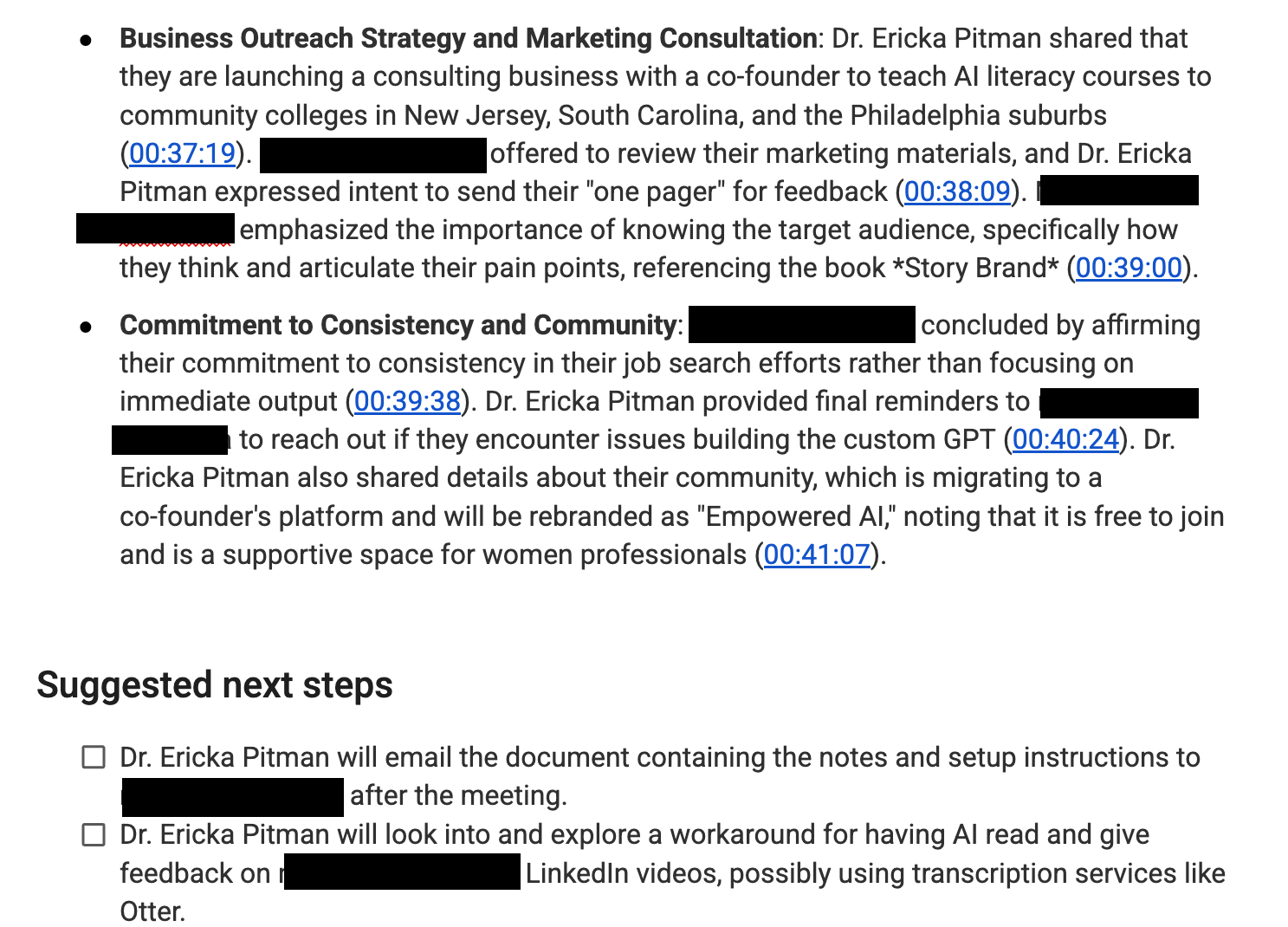
Gemini Generated Notes (Client Name Redacted)
With Granola, one of the things I love is how it runs in my background, and I can add my own notes. It also works across platforms, so I can activate it in any meeting that I am in. I have also used it to transcribe YouTube videos for me to get the key points. This makes my workflow easier and gives me flexibility.
It also has embedded AI search. I can ask it to list all my actionable items (see image below for example). I can sync it with multiple calendars. It also integrates with Notion, Slack, and a few other apps. It just does more, even on the free plan.
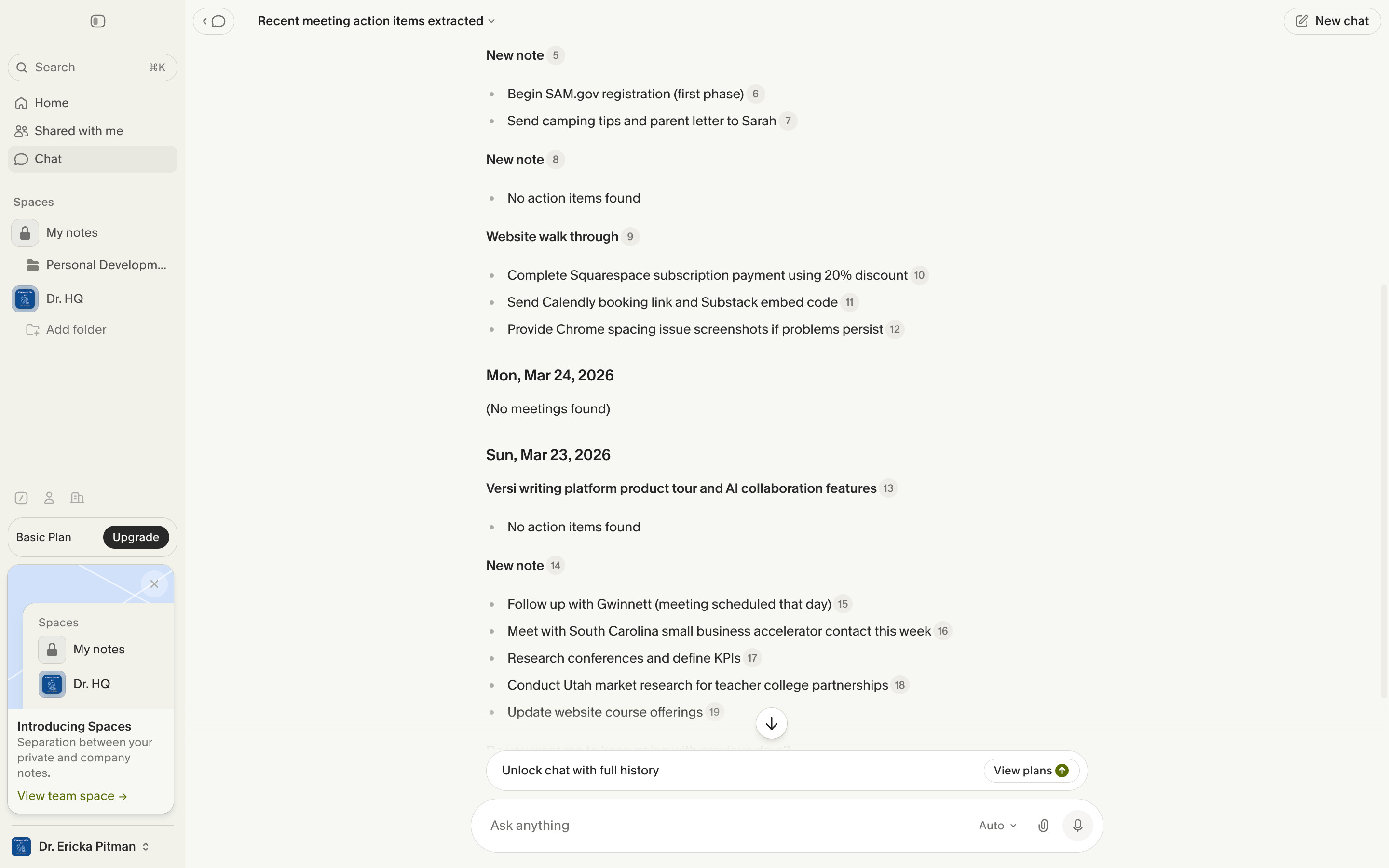
AI Generated Actionable Items Summary in Granola
The fourth and final step is to decide and move on. It’s not a permanent decision because we know the landscape will keep shifting and so will your needs. Build your toolkit over time and do a clean-out evaluation, perhaps monthly or bi-monthly. Either adopt the tool, bookmark it, or set it aside without any guilt.
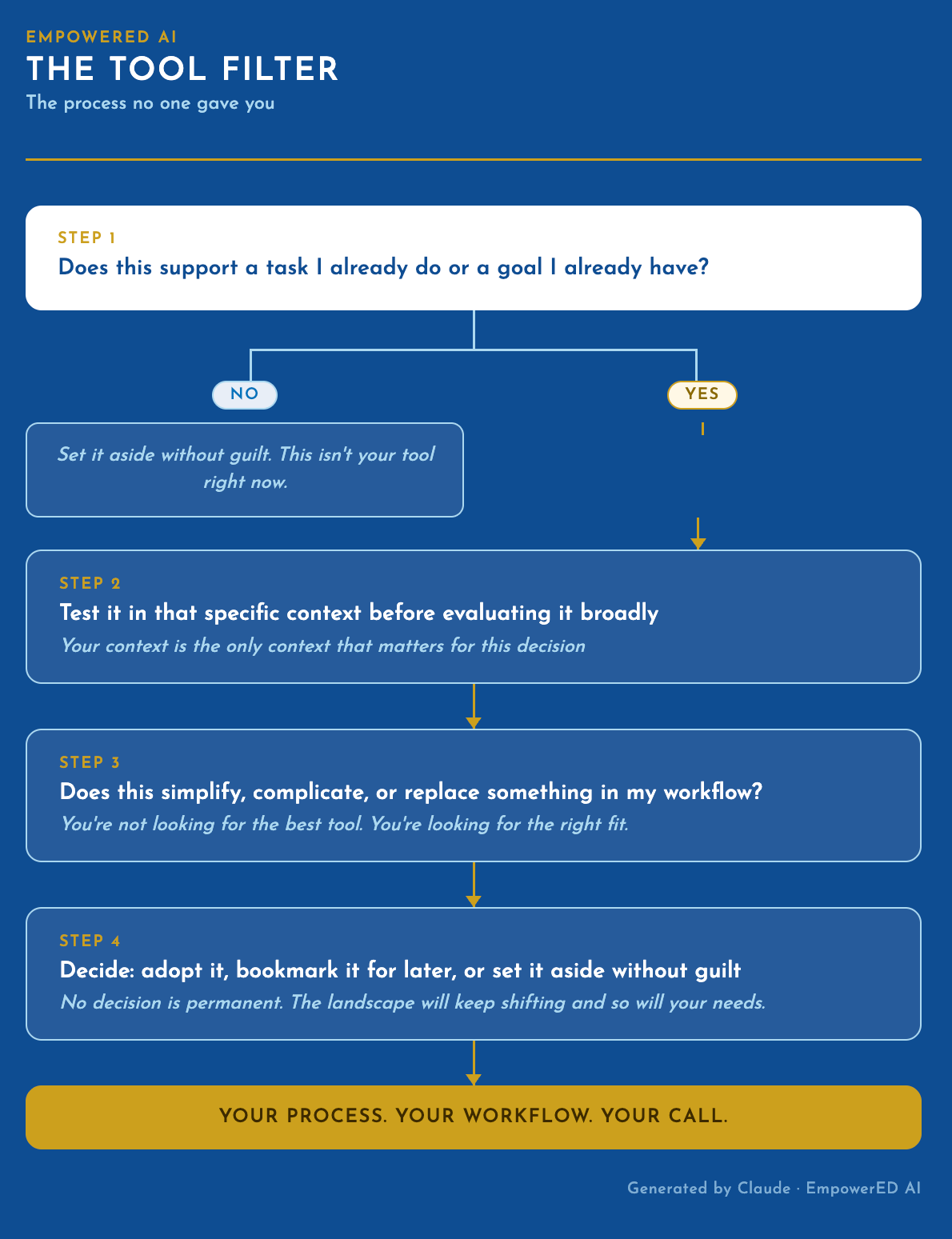
The Tool Filter
Now you have a process to build that toolkit with ease and adaptability.
Closing the Series: A Reflection
You will continue to see posts about the latest AI tool, win, or certification. Now, I hope that you will read them differently. Less panic, and more discernment. All the while asking yourself, does this truly support my tasks and goals?
Over the last four weeks, we have taken a deep dive into the DOL framework and what that practically means for AI adoption and implementation.
Post 1: What the framework was and why it mattered
Post 2: Your starting point
Post 3: Your assets
Post 4: A process that adapts
One of my favorite cliches that I love to hate is, “It’s about the journey, not the destination.” It applies to the world of AI. We have no concept of what the “destination” will look like. Even if we did, we probably wouldn’t truly understand it. If someone told me in 1996 about the iPhone, it would’ve remained a concept I tried to understand in my mind, not the experience that it is.
These are still early days or the beginning of the journey. Instead of stressing about it, know it will change, and enjoy the ride using your context as the guide.
If this series gave you clarity, the next step is applying it to your specific workflow. Book a free 15-minute consultation, and let’s build from here.